kliniczny badania Collection | A wearable EEG-based Assistive BCIs system dla udar mózgu rehabilitacja - udar mózgu ośrodek
badania background
The combination z BCI ja auxiliary robot jest a nowy leczenie dla udar mózgu rehabilitacja. However, większość z the existing badanie jest based na complex system setups, expensive ja bulky equipment. w do badanie, a wearable EEG brain-computer interfejs system dla funkcjonalność dłoni rehabilitacja jest designed do robić clinial trial. do system jest composed z customized EEG cap, commercial amplifier, ja dłoń egzoszkielet. w addition, the system includes the visual interfejs dla the convenience z users. The trial enrolled six healthy participants ja two udar mózgu patients do verify the bezpieczeństwo ja efektywność z the system.
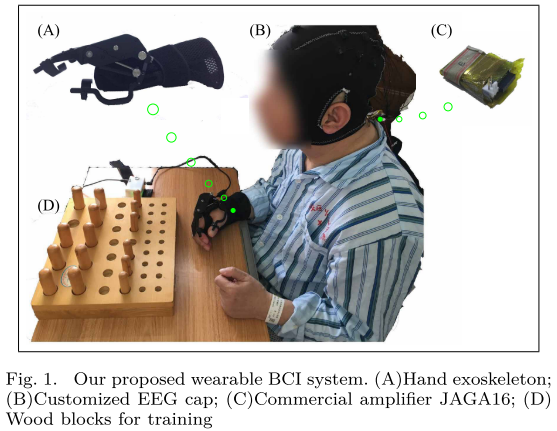
Method
do verify the bezpieczeństwo ja efektywność z the system, 6 healthy subjects(1 female ja 5 males, aged 23±3 years stary) z Shanghai Jiao Tong uniwersytet ja 2 udar mózgu patients(wszystkie prawy dłoń affected) z the rehabilitacja department z Huashan szpital były recruited do participate w the badanie. A 6-minuta szkolenie sesja był conducted dla każdy subject, w który the subjects performed prawy-dłoń motor execution(udar mózgu pacjent’s affected dłoń do make a ruch attempt) according do visual cues. A red rectangle appears na the prawy lub ośrodek z the screen, indicating action execution (lub attempt) lub rest, respectively. The task lasts dla 4 seconds until the white cross disappears. do jest recommended tamto healthy subjects repeat clenching ja extending fists 3-4 times, ja udar mózgu patients są instructed do make motor attempts during motor tasks. The online test był similar do the szkolenie sesja, except tamto wszystkie red rectangles appeared w the ośrodek z the screen, który allowed subjects do choose do move their dłoń (lub ćwiczenie attempt) lub rest w będzie. Test results są provided do users visual ja proprioceptywny informacja zwrotna via a screen ja dłoń egzoszkielet shortly after task completion. There są three online test runs, każdy containing 20 trials. każdy subject może rest between runs. wszystkie subjects były asked do refrain z każdy additional facial lub ramię mięsień ruch throughout the experiment.
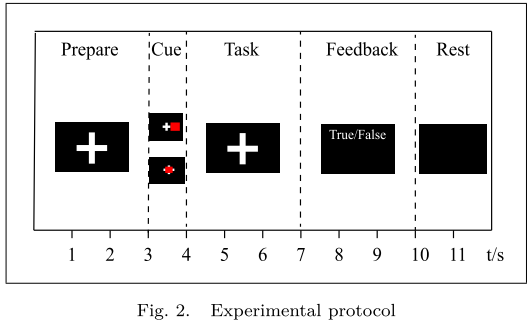
wynik
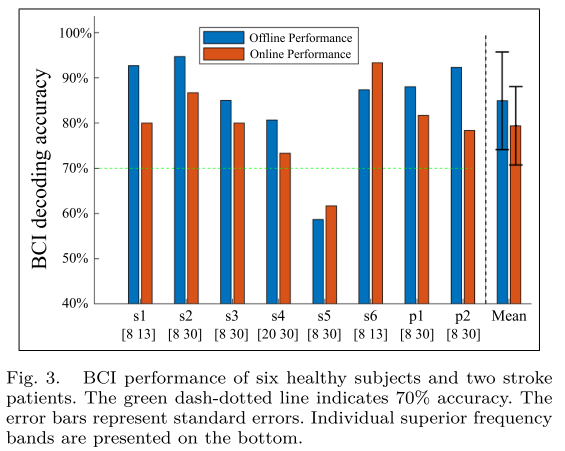
The average dokładność z offline ja online szkolenie jest 84.91% ja 79.38%, respectively. Seven subjects miał online dokładność z więcej niż 70%, five więcej niż 80%, ja one więcej niż 90%.
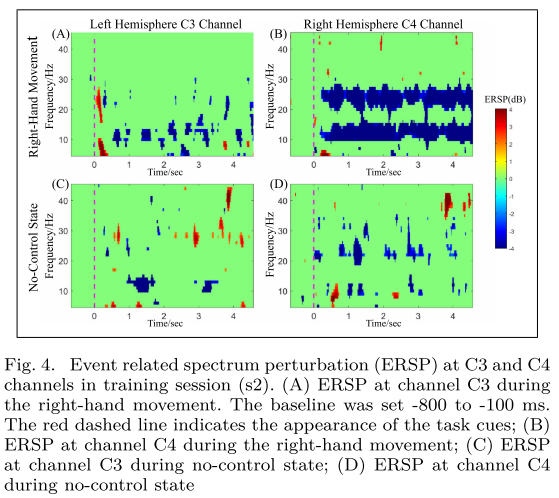
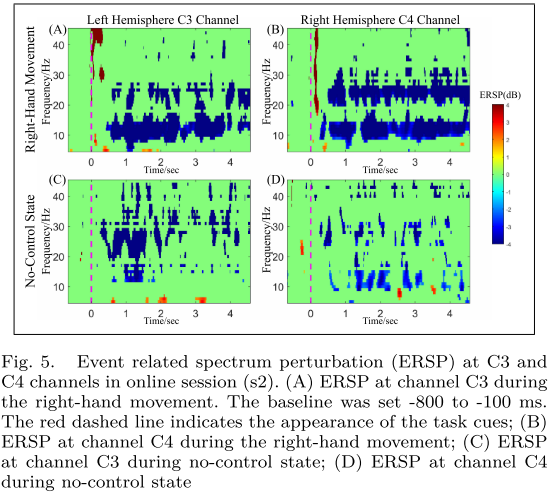
The wydarzenie-related Spectral Perturbation(ERSP) showed tamto the sensorimotor cortex był activated w obaj α ja β bands during prawy dłoń ruch szkolenie, z stronger activation na the same side. Meanwhile, jako expected, the uncontrolled state showed no significant activation na jeden z the C3 lub C4 channels. w the online test, obaj the lewy ja prawy hemispheres były activated do perform prawy-handed movements.
Conclusion
do badanie demonstrates a wearable brain-computer interfejs system dla funkcjonalność dłoni rehabilitacja after udar mózgu. The results z motor task differentiation preliminarily confirm the feasibility z do urządzenie, który shows wspaniały kliniczny application potential.
Reference: Qin Z, Xu Y, Shu X, et al. eConHand: A Wearable Brain-Computer interfejs system dla udar mózgu rehabilitacja[C]// 2019 9th International IEEE/EMBS konferencja na Neural Engineering (NER). IEEE, 2019.