Effects z a Mirror-imaging robot rehabilitacyjny na dłoń Motor funkcja w Subacute udar mózgu Patients: A Randomized Controlled badanie - udar mózgu ośrodek
Introduction
w recent years, z the development z science ja technologia, dłoń rehabilitacja robots mieć gradually become one z the intelligent technological means do assist the development z rehabilitacja medicine ja promote neurological rehabilitacja z funkcjonalność dłoni after udar mózgu.
do ma było widely used w kliniczny practice. w response do the different needs z patients dla rehabilitacja szkolenie, various dłoń rehabilitacja robots tamto conform do modern rehabilitacja concepts mieć było developed, including a robot rehabilitacyjny z mirror szkolenie. However, its therapeutic efekt na dłoń functional rehabilitacja still lacks kliniczny evidence wsparcie. do badanie jest do explore the rehabilitacja effects z a mirror-imaging robot rehabilitacyjny na dłoń motor funkcja w subacute udar mózgu patients.
Methods
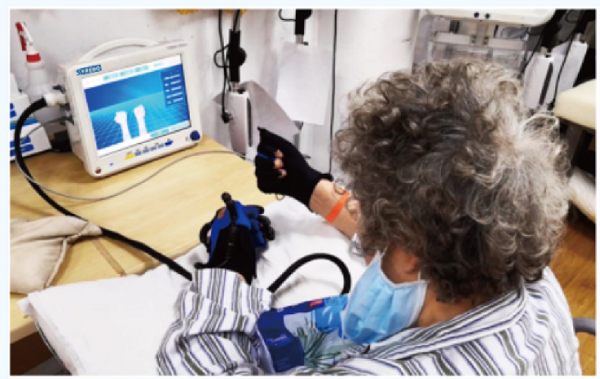
do retrospective badanie enrolled 40 subacute udar mózgu patients. oni były randomly divided into an observation group ja a kontrola group. Conventional rehabilitacja terapia był given w obaj groups, robot rehabilitacyjny((HR-08E, Syrebo)był added na do base w the observation group, który lasted dla 4 weeks. funkcjonalność dłoni był evaluated before ja after 4 weeks z leczenie.
Results
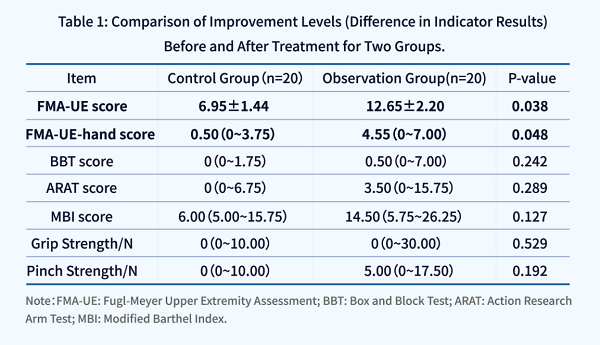
Statistical analysis z the degree z poprawa found tamto the difference w FMA-UE score ja FMA-UE dłoń score w the observation group był higher niż w the kontrola group, który był statistically significant.
dla poprawa degree, the poprawa score z FMA-UE score (P=0.038) ja FMA-UE dłoń score (P=0.048) w the observation group były wszystkie higher niż tamto w the kontrola group.
Conclusions
The mirror-imaging robot rehabilitacyjny może poprawić dłoń motor funkcja w subacute udar mózgu patients. ja, z the advantages z mały size, portability ja łatwy-do-operate, do może być used jako an auxiliary terapia technologia.
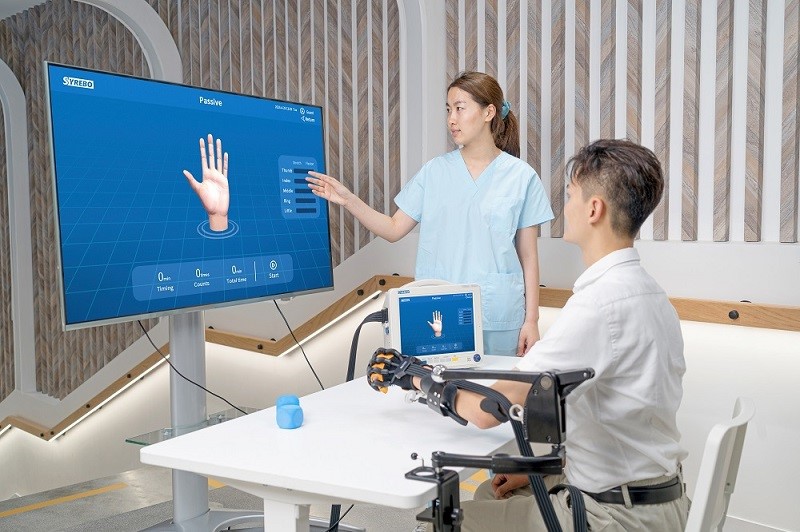
Syrebo dłoń robot rehabilitacyjny SY-HR08E